L24 · Garden & Lawn
Lawn Grub & Armyworm
Spodoptera mauritia / Herpetogramma licarsisalis
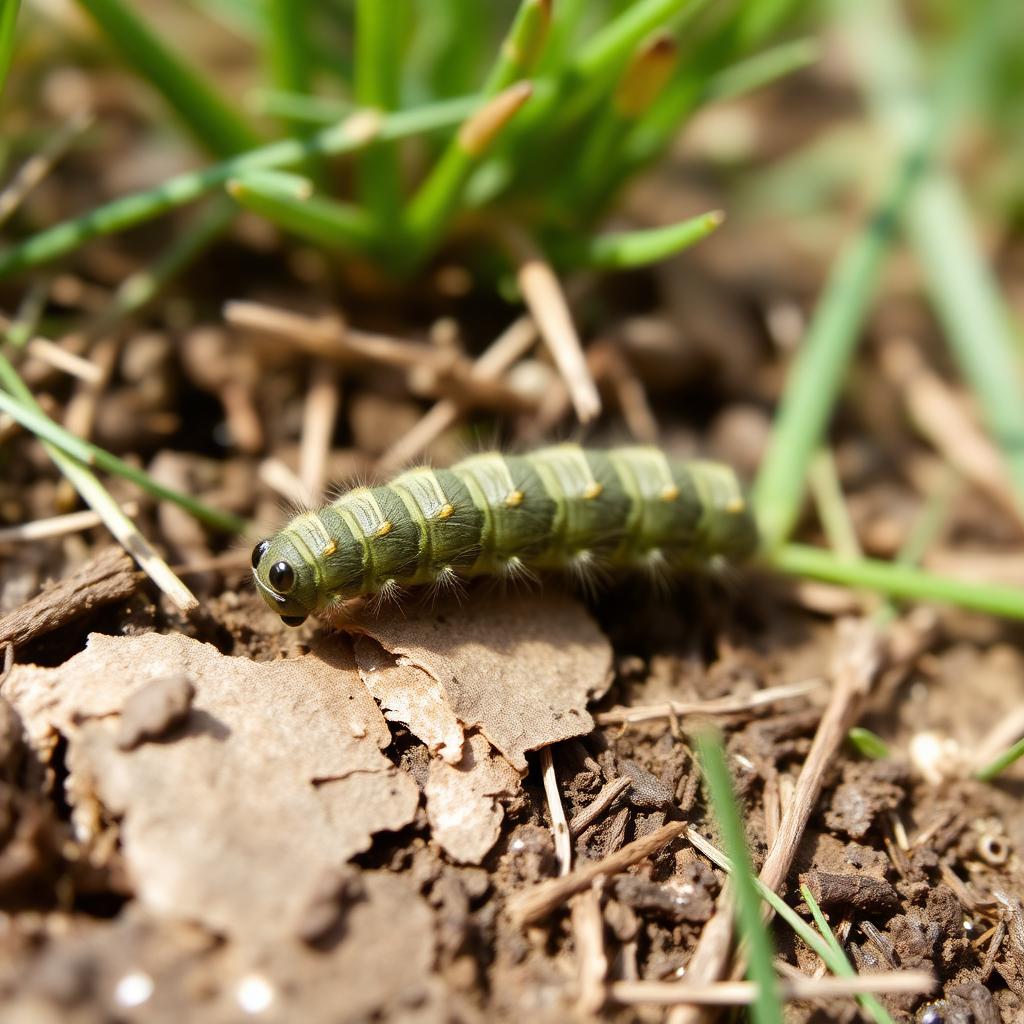
Caterpillars that chew lawn down to the runners overnight. Brown patches and birds pecking the grass are the giveaway.
- Size
- Caterpillars 25–40 mm at full size
- Habitat
- Turf — couch, kikuyu, buffalo and Queensland blue
- Activity
- Late summer to autumn, feed at night
Overview
"Lawn grub" covers several caterpillar species — mainly armyworm and sod webworm — that feed on lawn leaves at night during late summer and autumn. A heavy infestation can shred a healthy green lawn into brown straw within a few days. The first sign is usually flocks of magpies, ibis or wagtails feeding on the lawn, followed by yellowing patches that quickly spread. The adult is a brown moth that flies up when you walk across the lawn at dusk — that's the warning sign that eggs are being laid.
How to identify
- Green, brown or striped caterpillars 25–40 mm long, curled up in thatch during the day
- Brown or yellowing patches in the lawn that spread daily
- Chewed leaf edges and grass shredded down to the runner
- Small brown moths flying up from the lawn at dusk
- Birds (magpies, ibis, wagtails) suddenly very interested in your lawn
Pro Tip
Do the soapy water test in any suspicious yellow patch before spraying — if no grubs surface, it's likely a watering, fungal or fertiliser issue instead.
General guidance only. Information on Home Pest Defence is provided for educational purposes and is not a substitute for professional advice. For termites, venomous spider bites, wasp nests in walls, or protected wildlife, contact a licensed pest controller, your GP, or the relevant state wildlife authority. In emergencies call 000; for poisoning call 13 11 26.