F23 · Flies & Wasps
House Fly & Blowfly
Musca domestica / Calliphora spp.
The two big household flies. Annoying, unhygienic, and a sign that a food or waste source needs cleaning up.
- Size
- House fly 6–7 mm; blowfly 8–14 mm
- Habitat
- Bins, compost, pet waste, dead animals, kitchens
- Activity
- Year-round, peaks in warm months
Overview
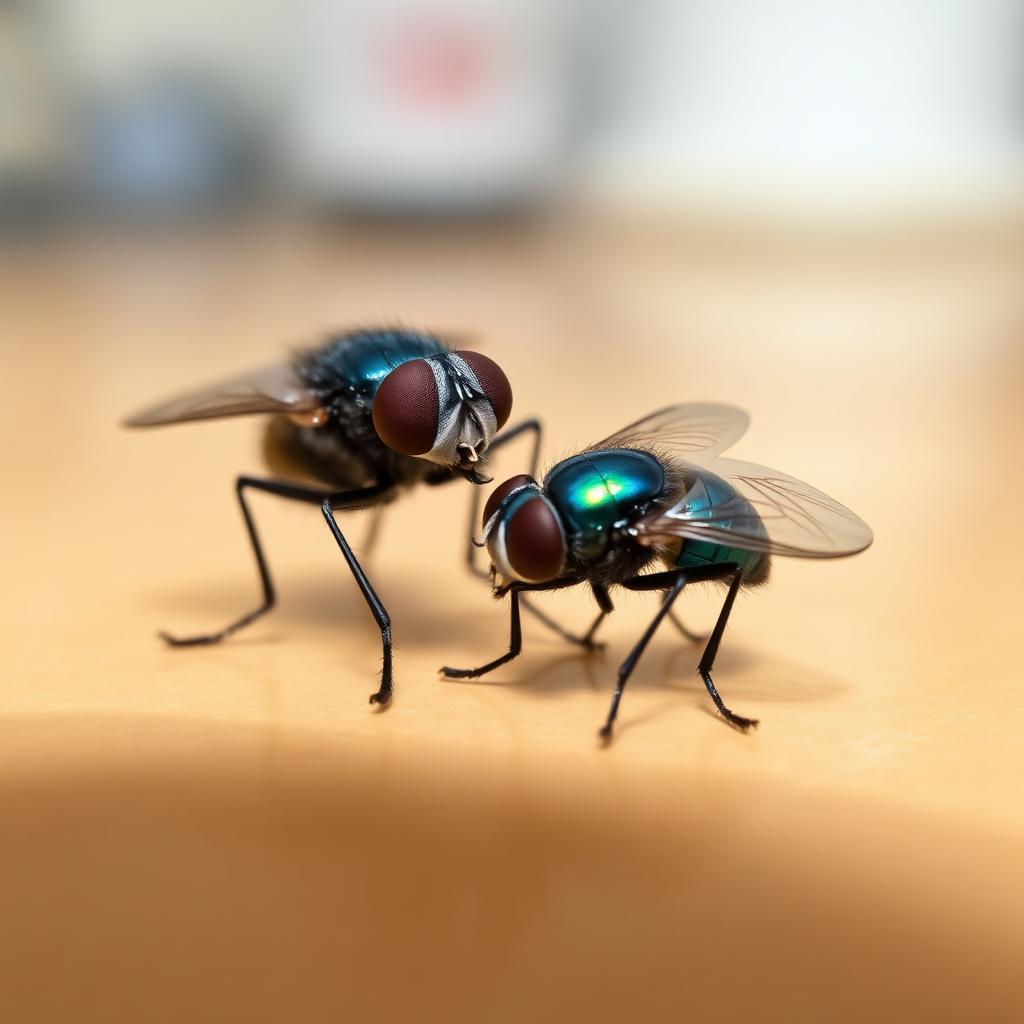
House flies (small, grey) and blowflies (larger, shiny blue or green) breed in decaying organic matter — bins, pet droppings, dead animals in the roof or garden, even forgotten meat scraps. A single fly can lay hundreds of eggs that hatch into maggots within 24 hours in warm weather. Both species walk on faeces and rubbish then land on food and surfaces, spreading bacteria like E. coli and Salmonella. The most effective control is sanitation: remove the breeding source and the flies disappear within a generation.
How to identify
- House fly: dull grey with four dark stripes on the back, 6–7 mm
- Blowfly: larger (8–14 mm), shiny metallic blue, green or bronze
- Maggots (larvae): white, legless, 5–15 mm in moist organic matter
- Sudden swarm of blowflies indoors often means a dead animal in the roof, wall or yard
Pro Tip
A sudden indoor blowfly swarm with no obvious source almost always means a dead rat or possum in the roof or wall cavity — start there.
General guidance only. Information on Home Pest Defence is provided for educational purposes and is not a substitute for professional advice. For termites, venomous spider bites, wasp nests in walls, or protected wildlife, contact a licensed pest controller, your GP, or the relevant state wildlife authority. In emergencies call 000; for poisoning call 13 11 26.