A15 · Ants
Carpenter Ant
Camponotus spp.
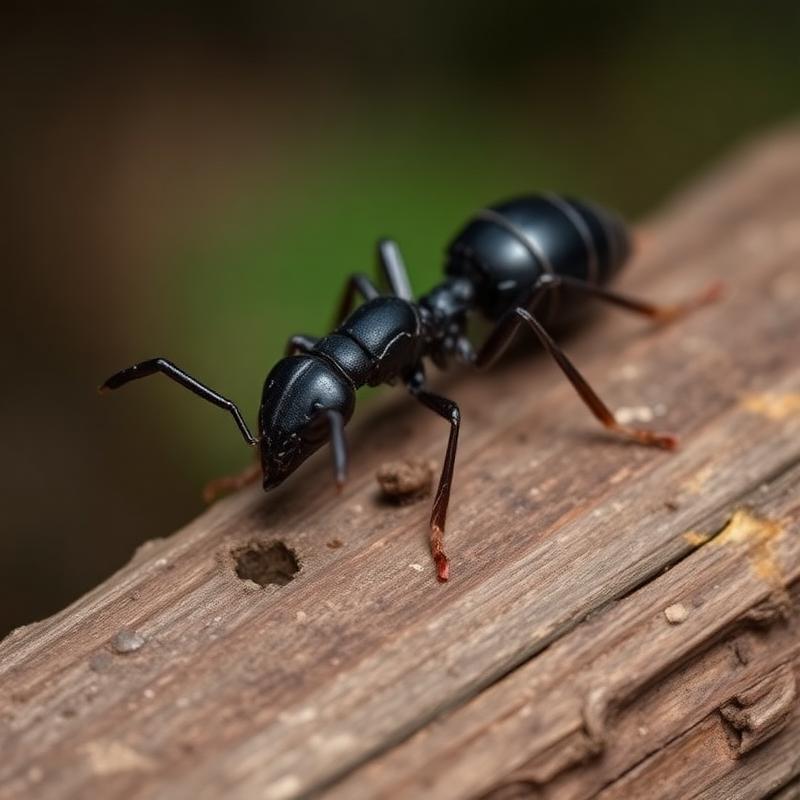
Large black ants that excavate galleries in damp timber. They don't eat wood — but the damage can rival termites.
- Size
- 7–15 mm
- Habitat
- Damp or decaying timber, tree stumps, wall voids
- Activity
- Spring to autumn, nocturnal foragers
Safety Warning
Carpenter ant damage looks like termite damage and is often mistaken for it. If unsure, book a timber-pest inspection.
Overview
Unlike termites, carpenter ants don't eat timber — they chew it out to nest, leaving smooth galleries and piles of sawdust-like 'frass' below entry holes. They prefer wood that's already softened by moisture, so an infestation usually points to a leak, poor flashing or rotting sub-floor timber. Fixing the moisture problem is half the treatment.
How to identify
- Large (7–15 mm), usually shiny black, sometimes with a reddish thorax
- Single node between thorax and abdomen, smoothly rounded back
- Piles of fine sawdust-like frass below skirting, window frames or decking
- Faint rustling sounds inside walls at night
- Winged 'swarmer' ants near windows in spring (often confused with termites)
General guidance only. Information on Home Pest Defence is provided for educational purposes and is not a substitute for professional advice. For termites, venomous spider bites, wasp nests in walls, or protected wildlife, contact a licensed pest controller, your GP, or the relevant state wildlife authority. In emergencies call 000; for poisoning call 13 11 26.