M22 · Biting Pests
Biting Midge / Sandfly
Culicoides spp.
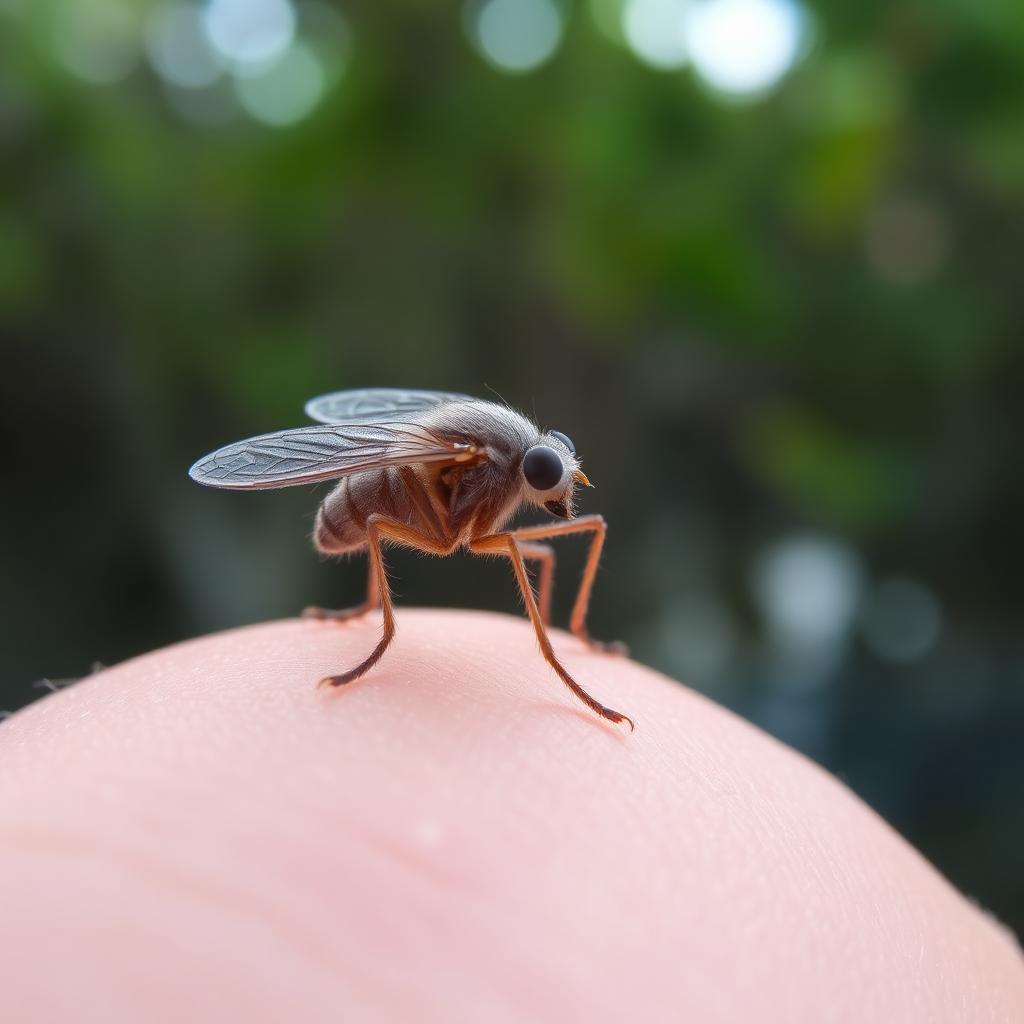
Tiny biting flies ("sandflies") that swarm at dawn and dusk near coastal wetlands. Bites itch for days.
- Size
- 1–3 mm
- Habitat
- Coastal mangroves, estuaries, tidal mudflats — breeds in damp sand and mud
- Activity
- Dawn and dusk, especially around the new and full moon
Overview
Often called sandflies in Australia, biting midges are tiny — small enough to pass through normal flyscreens. Only the females bite, feeding around dawn and dusk and on still, humid evenings. They breed in damp coastal soil, mangroves and estuaries, so they're a major nuisance in coastal QLD, NT, northern WA and parts of NSW. Bites cause intensely itchy welts that can last a week, and some people develop large allergic reactions. They cannot be eradicated from the environment — control is about avoiding bites and reducing landings around the home.
How to identify
- Extremely small (1–3 mm) grey or black flies, often felt before seen
- Bites appear as clusters of small itchy red spots, often on ankles, legs and forearms
- Most active 1–2 hours either side of sunrise and sunset
- Worst on still, humid evenings near coastal wetlands
Pro Tip
For relief after bites: ice the welts and apply an antihistamine cream — try not to scratch, as broken skin can become infected.
General guidance only. Information on Home Pest Defence is provided for educational purposes and is not a substitute for professional advice. For termites, venomous spider bites, wasp nests in walls, or protected wildlife, contact a licensed pest controller, your GP, or the relevant state wildlife authority. In emergencies call 000; for poisoning call 13 11 26.